

Kristopher earned his J.D. at the University of Southern California Gould School of Law where he was a member of the Review of Law and Social Justice honors law journal and was awarded several scholastic honors.
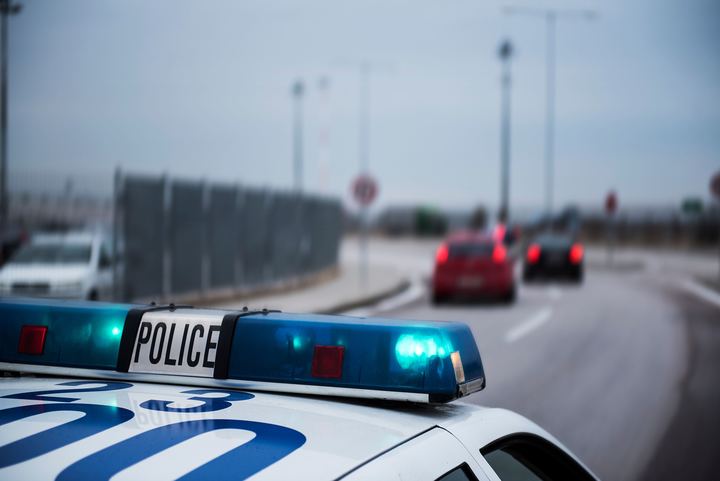
You can seek compensation when a police officer hits your car in Los Angeles – but the rules are different from a standard car accident claim.
Because the at-fault party is a government entity, you’re not dealing with a private insurer – you’re filing against the City of Los Angeles, the County, or the State of California, depending on which agency employs the officer – and you have six months to do it, not two years.
Was the Officer Responding Code 3?
The single most important question after a police car collision in Los Angeles is whether the officer was running lights and siren at the time of impact. The answer shapes everything – liability, immunity, and the strength of your claim.
What Is Code 3 and What Exemptions Does It Give?
Code 3 is the designation for an emergency response – an officer responding to a crime in progress, backing up another officer, or engaged in a pursuit. Under California Vehicle Code Section 21055, a Code 3 officer is exempt from certain traffic laws, including running red lights, exceeding the speed limit, and disregarding stop signs.
Two conditions must both be met for the exemption to apply:
- The officer must be responding to a qualifying emergency
- They must be running a forward-facing red light and sounding a siren as reasonably necessary
No lights and siren means no exemption. Full stop.
How Do Officers Lose Code 3 Immunity?
The exemption is not a blank cheque. California Vehicle Code Section 21056 states that Code 3 status does not relieve an officer of the duty to drive with due regard for the safety of all persons on the road.
In practice, that duty is defined by the officer’s own department protocol. The California Highway Patrol’s (CHP) Code 3 driving manual states that officers fail the due regard standard if they violate any statute, ordinance, or regulation of their agency and that violation causes death, injury, or property damage.
LAPD’s own training is explicit on intersections. Officers responding Code 3 must slow and be prepared to stop, clear the intersection lane by lane, and only proceed when certain there are no threats.An officer who blows through an intersection at speed without clearing lane by lane has violated that protocol.
In my experience, that is exactly the kind of breach that strips immunity and opens the door to a viable claim.
Case Result: Police Vehicle Collision
The Case: A police officer failed to slow at a red light and caused a major collision involving five people in San Mateo County. Our client sustained serious injuries requiring extensive medical treatment and a two-year recovery.
The case was hotly contested, and the officer’s department disputed liability throughout. We litigated the case to a settlement of $450,000 for our deserving client.
Kris did a professional job in litigating the case and I am thankful for his patience and help. – Verified client review
What If the Officer Had No Lights or Siren On?
If the officer was not running lights and siren, the Code 3 exemption does not apply – the officer is subject to the same traffic laws as any other driver. Negligent driving – running a red light, failing to yield, rear-ending a stopped vehicle – is negligent driving regardless of the uniform.
These cases are more straightforward on liability. The harder fight is against the government entity’s legal team, which will contest fault aggressively regardless of the evidence.
Does It Matter Which Agency the Officer Works For?
It matters significantly – because it determines which government entity you file your claim against. Filing against the wrong entity can derail your case before it starts.
| Officer/ Employee Type | Employing Agency | File Claim Against |
| LAPD officer | Los Angeles Police Department | City of Los Angeles |
| LA County Sheriff’s Deputy | LA County Sheriff’s Department | County of Los Angeles |
| California Highway Patrol officer | California Highway Patrol (CHP) | State of California (via Government Claims Program) |
| Caltrans vehicle operator | California Department of Transportation (Caltrans) | State of California (or Caltrans directly if equal to or less than $12,500) |
| Department of Corrections officer | California Department of Corrections and Rehabilitation (CDCR) | State of California (via Government Claims Program) |
What Happens If a Cop Rear-Ends You?
A rear-end collision involving a police vehicle follows the same basic negligence framework as any other rear-end crash. If the officer was not running Code 3, they are bound by the standard rules of the road.
I’m currently handling a case in which an officer rear-ended a client at a red light: the officer was not responding to an emergency. There were no lights, no siren, and no lawful basis for the collision. Cases like this turn on evidence – dashcam footage, body camera recordings, the official police report, and witness accounts.
Is the Government Automatically Liable If an Officer Rear-Ends You at a Red Light?
Not automatically – but it is a strong liability position.
In a standard rear-end collision, the striking vehicle bears the burden of explaining why the impact occurred. An officer who rear-ends a stationary vehicle at a red light with no Code 3 designation has no statutory exemption to rely on.
The government entity will still contest the claim – that is what they do.
Example
An off-duty corrections officer driving a Department of Corrections vehicle rear-ended a client at a controlled intersection. The vehicle was a marked government fleet vehicle. The officer was on duty at the time of the collision.
The claim was filed against the State of California. The case required litigation – the government did not engage in any meaningful pre-litigation settlement discussion.
What Happens If You Are Hit During a Police Chase?
Police chase cases are a different legal landscape entirely – and the hardest category of police vehicle claim to win.
During a pursuit, officers operate under a legal framework that gives them significant latitude. LAPD policy requires officers to continuously apply a balance test – weighing the seriousness of the offence against the danger posed to the public – but the threshold for proving the officer acted wrongly is much higher than in a standard collision.
The numbers reflect the risk. Between 2018 and early 2023, LAPD conducted 4,203 pursuits. Of those, 1,592 resulted in a traffic collision – and third-party victims sustained 496 injuries and 9 deaths.
526 people were killed in traffic crashes across Los Angeles County in 2025 – roughly one to two deaths every single day. Police pursuits are a small but significant contributor to that toll.
Who Is Liable If a Suspect Causes the Collision?
If the suspect vehicle – not the police car – strikes you during a chase, the suspect is the primary liable party. The pursuing officer may share liability if their conduct during the chase was reckless or violated department policy, but that is a higher bar to clear.
I’m direct with clients about chase cases – they’re difficult. They take a long time and they require the officer or department to have done something genuinely egregious – not just made a judgment call that turned out badly.
What If the Suspect Has No Insurance?
If the suspect is uninsured or underinsured, your own uninsured motorist coverage becomes critical. California law does not guarantee that a fleeing suspect carries adequate insurance – or any insurance at all.
Review your own policy before you need it. Uninsured motorist coverage is the safety net most people do not think about until it is too late.
What Should You Do After a Police Car Hits You?
The steps you take in the immediate aftermath of a police vehicle collision have a direct impact on the strength of your claim. Do not let the presence of a police officer at the scene change what you do.
Do the following:
- Call 911 and request a separate unit to file the report
- Get the officer’s name, badge number, and the name of their department
- Note the patrol vehicle’s licence plate and unit number
- Seek medical attention immediately, even if you feel fine
In regards to step four, a gap between the collision and your first medical evaluation is one of the most commonly exploited weaknesses in any injury claim.
What Evidence Should You Gather at the Scene?
We advise the following:
- Photograph everything – vehicle positions, road conditions, skid marks, traffic signals, and any visible injuries
- Get the contact details of every witness
- Note the location of any nearby surveillance cameras and ask the business or property owner to preserve the footage
In LA, everything in a police vehicle is recorded. Dashcam footage and body camera recordings are evidence. Your attorney can request this footage – but it must be preserved early.
Evidence from government agencies can be difficult to obtain and is sometimes lost or delayed – a formal preservation request sent promptly is not optional.
Can You Sue the Officer Personally?
Rarely. In most cases, the correct defendant is the government entity that employs the officer – the City, the County, or the State – not the individual officer. California Government Code holds public entities liable for the negligent acts of their employees acting within the scope of their duties.
Suing the officer personally is possible in cases involving intentional misconduct or conduct outside the scope of employment – but these are uncommon. In the vast majority of police vehicle collision cases, you’re filing against the government.
How Do You File a Claim Against a Government Entity in Los Angeles?
Filing a claim against a government entity in California is not the same as filing a standard personal injury claim. There’s a mandatory pre-litigation process, strict deadlines, and no insurer calling you with an offer.
What Is the Six-Month Deadline?
Under Government Code Section 911.2, you must file a formal government tort claim within six months of the date of the accident – not two years, which is the standard personal injury statute of limitations under CCP Section 335.1.
Miss that deadline and you lose your right to compensation. The government entity will not remind you and they will not call you with a settlement offer – the clock runs regardless of whether you know it exists.
More information on how long after an accident to file a claim can be found here.
| Situation | Deadline | Legal Authority |
| Standard personal injury claim | 2 years from date of accident | CCP §335.1 |
| Claim against a government entity | 6 months from date of accident | Gov. Code §911.2 |
| Late claim application | Up to one year from date of accident, with reason for delay | Gov. Code §911.4 |
What If You Miss the Six-Month Deadline?
There is a narrow window of relief. Under Government Code Section 911.4, you can apply to the public entity for leave to file a late claim – but only within one year of the accident, and you must provide a written explanation for the delay.
After one year, that right is gone entirely. There is no further recourse.
Do not rely on this provision. It is a last resort, not a safety net. If you were hit by a police vehicle in Los Angeles, contact a lawyer immediately.
Which Government Entity Do You File Against?
The entity you name depends entirely on which agency employs the officer – refer to the table in the ‘What is Code 3?’ section above for the full breakdown by officer type.
Getting this wrong is not a technicality. Filing against the City when the correct defendant is the County, or vice versa, can result in your claim being rejected and your deadline expiring before you can correct the error.
Why Does the Government Rarely Settle Pre-Litigation?
In my experience, government entities do not settle police vehicle collision cases before a lawsuit is filed – they do not contact you proactively and they do not make early offers. They wait.
The reason is structural. A government claims department is not operating under the same commercial pressure as a private insurer. There is no financial incentive to resolve a claim quickly. The default position is to deny, delay, and force the claimant to litigate.
If you’re interested in reading more about how often personal injury claims go to court, we have more information here.
Of the police vehicle cases we’ve taken to resolution, virtually all have required litigation. The $450,000 settlement in the San Mateo case (above) was not reached in pre-litigation. It was reached at trial.
You need a litigation attorney and not just a lawyer who files claims – one who is prepared to take the case to court and has a record of doing so.
What Compensation Can You Claim?
The categories of compensation available in a police vehicle collision are the same as in any California personal injury claim. What differs is the process for recovering them.
- Economic damages cover your measurable losses – medical expenses, lost wages, property damage, and future treatment costs.
- Non-economic damages cover pain and suffering, emotional distress, and loss of enjoyment of life.
In cases involving catastrophic injuries – spinal cord damage, traumatic brain injury, severe orthopaedic injuries – the non-economic damages can significantly exceed the economic losses.
Punitive damages are rarely available against government entities in California. The focus in these cases is on full and fair compensatory damages.
The value of your claim depends on the severity of your injuries, the strength of the liability evidence, and the skill of the attorney litigating it. Early offers – on the rare occasion a government entity makes one – almost never reflect the true value of a serious claim.
How Peerali Law Can Help
At Peerali Law, we handle complex personal injury cases against government entities – including police vehicle collisions where liability is contested and litigation is required.
I am Kristopher L. Peerali, co-founding partner of Peerali Law. I earned my J.D. from USC Gould School of Law and have been admitted to the State Bar of California since 2018.
My results include a $16.3 million premises liability settlement and a $5.2 million car accident settlement. You can review our full case results here.
If you have been hit by a police vehicle in Los Angeles – whether the officer was on duty, off duty, responding Code 3, or simply not paying attention – I want to hear from you.
Key deliverables when you work with Peerali Law:
- Free case review to assess liability, identify the correct government entity, and advise on your filing deadline
- Government tort claim preparation and filing
- Evidence preservation requests – dashcam footage, body camera recordings, official reports
- Full litigation representation if the government entity does not settle
We handle police vehicle collision cases on a no-win, no-fee basis – you pay nothing unless we recover compensation for you. Full details of our fee structure are available here.
Call us at 818-600-0626 or request a free case review today.
I Already Have a Lawyer, Is It Worth Switching?
If your current lawyer has not filed a government tort claim within the six-month window, or has no experience litigating against government entities, the answer is probably yes.
Police vehicle collision cases require a specific type of litigation experience. Most personal injury attorneys settle cases before trial, while these cases almost never settle before trial.